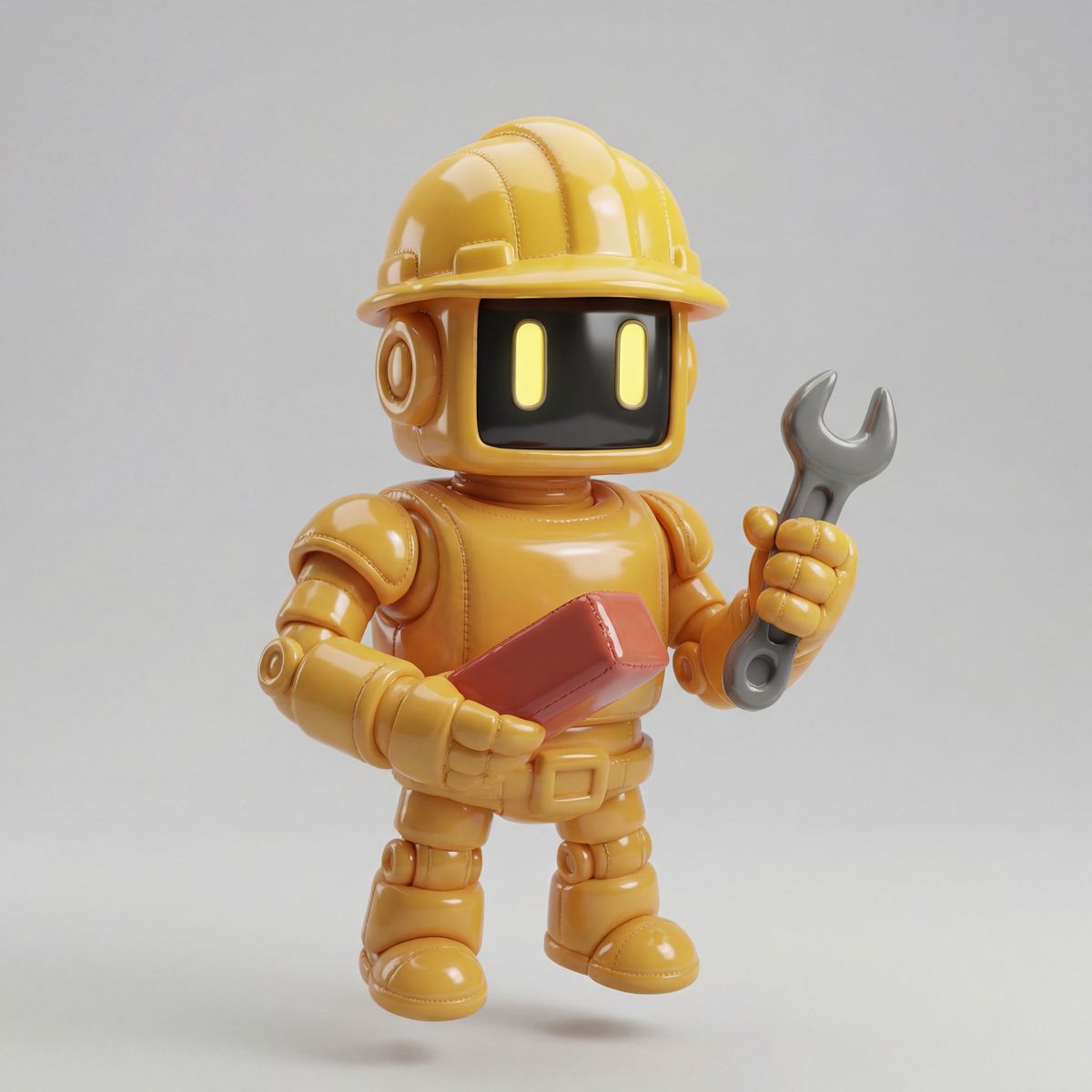

Every world starts with a question. Not "what does this place look like?" but "who lives here, and what do they want?"
That's the instinct behind the Jengo AI Worldbuilding Series, a running creative experiment where we use generative AI tools to build fully realized fictional universes, with lore, visual identity, characters, and atmosphere.
Each world is different. Some are Afrofuturist. Some are retrofuturist dystopias. Some are quiet, domestic, and rooted in Nairobi street-level detail. All of them are made with prompts, workflows, and a lot of iteration.
This article does two things: pulls back the curtain on how the series actually works, and gives you a framework you can steal to build your own worlds with AI.

Behind the scenes
Why worldbuilding, and why now

Most AI content in the creative space is reactive. Someone gives you a topic, you generate an image, done. But the work that actually moves people tells a story over time. It builds context. It makes you care.
Worldbuilding is the discipline underneath every great story, game, and film universe. It's the infrastructure that makes fiction feel real. And right now, in 2026, the AI tools available to independent creators have reached a point where you can actually do serious worldbuilding without a studio budget or a team.
The goal was never to make pretty pictures. It was to make places that feel like they existed before you arrived.
The Jengo AI Worldbuilding Series lives on YouTube, TikTok, X, and Meta Platforms. Each entry is a self-contained world, with its own visual language, backstory, and characters. But what you see in the final video is the output of a workflow.
The stack
Tools We actually use

Claude/JengaPrompts
Lore writing, character voice, context documents, prompt engineering
Prompt templates, remix workflows, visual consistency control

Gemini Veo/Grok Imagine
Short-form video scenes, atmosphere reels, character movement

Suno
World soundtrack, ambient audio, thematic music beds

GPT Images/Grok Imagine/Nanobanana
Visual identity, character portraits, environment concept art
The framework
How to build a world with AI, start to finish

This is the actual process, distilled from the series. It runs in five phases. You can compress it into a weekend or stretch it across a month, depending on depth.
Write the world premise in one paragraph
Before you open any tool, write a single paragraph that answers: where is this world, when is it, who lives here, and what is the central tension? This is your anchor. Every prompt you write later should be traceable back to it.
Build a context document with Claude
Expand the premise into a structured context document covering geography, social structure, visual language, technology level, cultural references, and at least two named characters. This becomes your project bible. Drop it into every tool session as your system context.
Lock the visual language in Midjourney/GPT Images/Grok Imagine/Nanobanana
Run 10 to 15 test prompts specifically for atmosphere before you generate any characters or scenes. Find 3 outputs that feel like the world, then pull the visual constants from those: lighting, palette, texture, architectural grammar. These become part of every future prompt.
Generate character portraits and key locations
With the visual language locked, generate at minimum two named characters and three distinct locations. These create the skeleton of the world, the who and where that an audience can orient around. Maintain visual consistency by including your locked style constants in every prompt.
Produce a short atmosphere reel with Veo 3 and Suno
Turn your best visuals and lore fragments into a 30 to 60 second video with ambient audio. This is the shareable artefact for short-form platforms. The goal is not to explain the world. It's to make someone feel like they've just glimpsed a place they want to know more about.
Prompt example: world premise to visual language
Start with your premise paragraph in Claude, then ask it to extract a visual language brief: lighting conditions, dominant palette, architectural reference points, and a single sentence that describes the feeling of standing in this world.
What it actually looks like
A prompt from inside the series
Here is a real prompt template from the series, built for a world called Jua Kali Futura, set in a near-future Nairobi where informal fabrication workshops have become the backbone of the city's AI infrastructure:
hyperrealistic photograph, Jua Kali Futura, Nairobi 2047, open-air AI fabrication workshop, corrugated iron structures retrofitted with embedded compute panels, warm afternoon haze, dust-diffused golden light, Eastlands aesthetic, a woman in her 40s wearing a modified workshop apron with sensor patches, confident expression, shallow depth of field, --ar 9:16 --style raw --v 7
Notice what's doing the work: the world name, the year, the location anchor, the material language, the light condition, the human presence, and the emotional register. Each element traces back to the context document. The result is not a random image. It's a specific moment in a specific place.
For creators reading this
What worldbuilding gives your content that single posts can't
Serialized creative content compounds in a way that individual posts never do. When your audience encounters world number three in a series, they bring everything they've already learned with them. The lore, the visual language, the names. It creates a depth that algorithms reward and audiences stay for.
For creators on TikTok and YouTube specifically, a worldbuilding series also solves the hardest problem in consistent content: what do I make next? When you have a world, every character, location, and event in that world is a potential video. The constraint becomes creative fuel.
The Jengo AI Worldbuilding Series is ongoing. New worlds drop regularly on both platforms. The full prompt workflows, context document templates, and visual language briefs are available inside JengaForge and JengaPrompts for anyone who wants to build their own.
Watch the series. Build your world.
AI for creativity and productivity
Curated by JengoAI and Claude